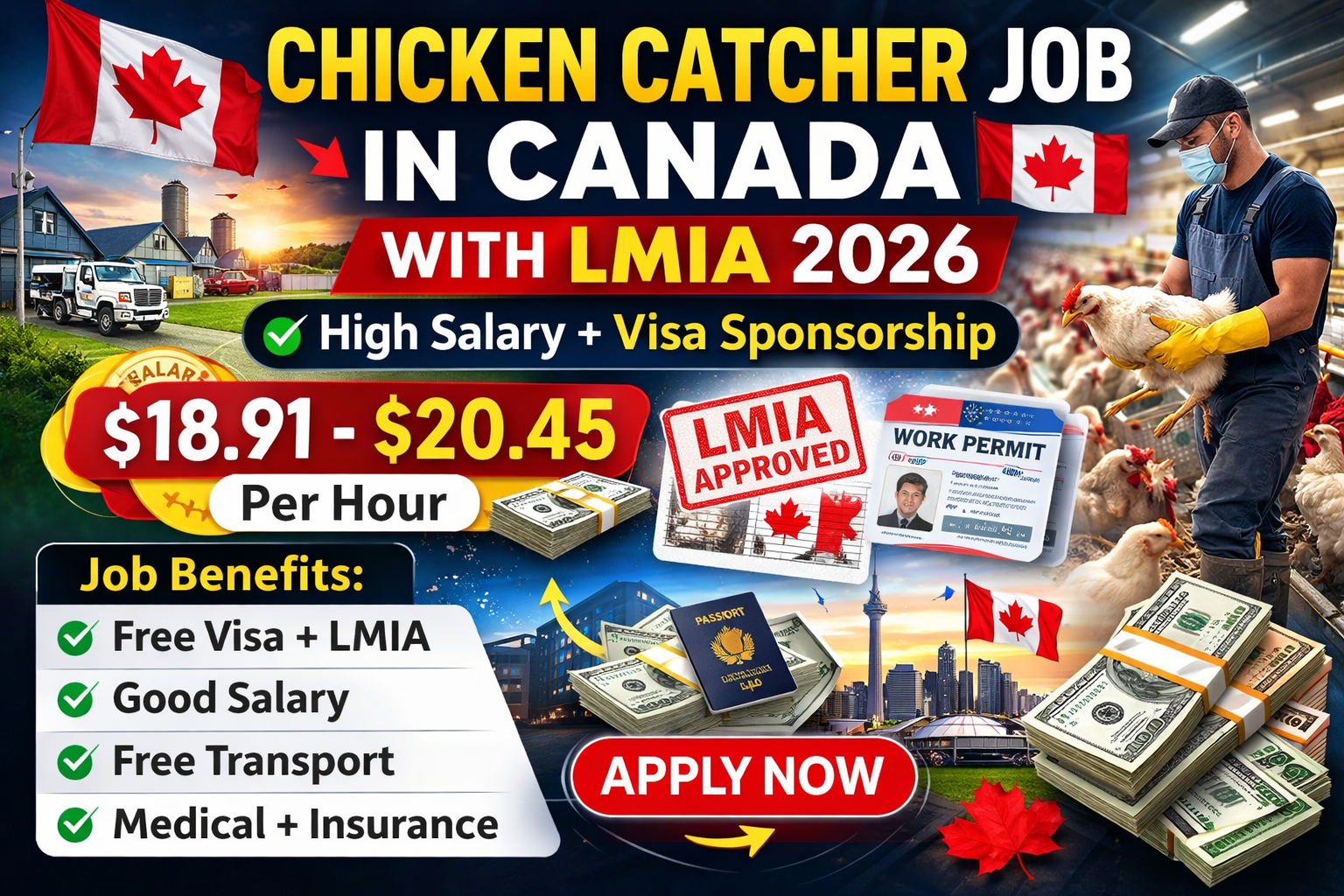
Chicken Catcher Job in Canada with LMIA 2026 – Salary, Visa Process & How to Apply
For many people, working in Canada represents more than just a job — it represents financial stability, international work experience, and a chance to build a better future. In 2026, one opportunity drawing attention among foreign workers is the Chicken Catcher Job in Canada with LMIA 2026, offered in Nova Scotia’s agricultural sector. As demand for Canada poultry jobs with visa sponsorship continues to grow, applicants are increasingly exploring farm worker roles that provide structured wages, employer-supported LMIA, and a clear work permit pathway.
However, it is important to approach such opportunities with realistic expectations. The Chicken Catcher position is a physically demanding poultry farm job that requires strength, consistency, and the ability to work overnight shifts in a fast-paced environment. Offered by Eden Valley Poultry Incorporated in Berwick, Nova Scotia, this role involves catching and loading live poultry while following strict animal welfare and safety standards. It is not an “easy visa shortcut,” but rather a genuine agricultural employment opportunity within Canada’s Temporary Foreign Worker framework.
In this complete guide, you will find detailed information about salary structure, incentive pay, LMIA explanation, Canada work permit process, job requirements, benefits package, estimated expenses, and possible long-term immigration pathways. By the end of this article, you will have a clear, practical understanding of whether the Chicken Catcher Job in Canada with LMIA 2026 aligns with your skills, physical capability, and long-term goals.
Overview of Chicken Catcher Job in Canada with LMIA 2026
The Chicken Catcher Job in Canada is a physically demanding poultry farm position offered by Eden Valley Poultry Incorporated, located at 326 Main Street, Berwick, Nova Scotia.
The company processes and markets chickens and turkeys for farmers in:
- Nova Scotia
- Prince Edward Island
This position is classified as a permanent farm labor job and is part of Canada’s agricultural workforce sector.
Job Title:
Chicken Catcher
Location:
Nova Scotia & Prince Edward Island (Canada)
Employment Type:
Permanent
Language of Work:
English
Visa Support:
Employer states LMIA will be provided (subject to approval)
This job falls under general farm worker / poultry farm jobs in Canada for foreign workers and may align with programs like the Temporary Foreign Worker Program (TFWP), depending on the LMIA approval.
Salary Details for Chicken Catcher Job in Canada
Understanding the financial side is important before applying for any Canada LMIA poultry jobs 2026.
Hourly Wage and Incentive Structure
- Base Pay: $18.91 per hour
- Incentive Potential: +$2.00 per hour
- Maximum Rate: $20.45 per hour
The additional $2.00 is performance-based incentive pay.
This makes it competitive compared to other Canada farm worker jobs with LMIA.
Monthly and Annual Income Estimate
Let’s calculate realistically.
Assuming 40 hours per week:
- Weekly (at $18.91): ~$756
- Monthly (before tax): ~$3,000 – $3,300
- Annual (before tax): ~$36,000 – $39,000
After tax (approximate take-home depending on province and deductions):
- Monthly net: $2,400 – $2,700 CAD
This is typical for entry-level poultry farm jobs in Canada for foreign workers.
Overtime and Night Shift Pay
This job involves:
- Overnight shifts
- 5–6 nights per week
Overtime rules depend on provincial labor law in Nova Scotia. Overtime eligibility varies based on total hours worked weekly.
LMIA and Canada Work Permit Process Explained
One of the most important aspects of the Chicken Catcher Job in Canada with LMIA 2026 is the immigration process.
What is LMIA and Why It Matters?
LMIA stands for Labour Market Impact Assessment.
It is issued by the Canadian government to confirm that:
- No Canadian citizen or permanent resident is available for the job
- The employer is allowed to hire a foreign worker
An LMIA-approved employer in Canada allows you to apply for a closed work permit tied to that specific employer.
Important: LMIA does not guarantee visa approval. You must still qualify under Canada’s immigration rules.
Canada Work Permit Process After LMIA
Typical steps:
- Employer receives positive LMIA
- You receive job offer letter + LMIA copy
- You apply for Canada work permit
- Medical exam
- Biometrics
- Visa decision
Processing times vary depending on country and application volume.
Documents Required for Canada Work Permit
Generally includes:
- Valid passport
- Job offer letter
- LMIA approval document
- Educational documents (if available)
- Work experience proof (if any)
- Medical examination report
- Police clearance certificate
Always apply through official government channels.
Processing Time After LMIA Approval
Approximate timeline:
- LMIA processing: 2–4 months
- Work permit processing: 2–5 months
Total possible duration: 4–8 months (can vary)
Job Requirements and Qualifications
The Chicken Catcher position is physically demanding.
Physical Requirements for Poultry Farm Work
You must be able to:
- Lift 50 lbs (approx 23 kg) regularly
- Bend and reach repeatedly
- Work in fast-paced environment
- Stand for long periods
- Work overnight shifts
This is manual labor job in Canada and not an office job.
Language Requirements (English Level)
- Must understand English documents
- Must follow safety manuals
- Communication at basic functional level
No IELTS requirement was mentioned, but English understanding is necessary for safety compliance.
Experience and Training Details
- High School Diploma preferred
- 1 year experience considered asset
- Not mandatory
- Training provided by employer
- Personal protective equipment provided
This makes it accessible for entry-level farm worker job in Canada with LMIA.
Work Environment and Daily Responsibilities
Understanding the daily routine is crucial before applying.
Daily Responsibilities
- Catching live chickens and turkeys
- Loading poultry into transport crates
- Following animal welfare procedures
- Following safe work procedures
- Meeting operational standards
This is physically demanding farm work in dim lighting conditions.
Work Environment
- Farm atmosphere
- Dim to dark lighting
- Fast-paced physical work
- Agricultural setting
If you are not comfortable with farm conditions, smell, dust, or physical strain, reconsider before applying.
Benefits Offered by Eden Valley Poultry
Compared to many poultry jobs in Canada, this offer includes strong benefits.
Employee Benefits Include:
- Medical insurance
- Dental care
- Pension plan
- Instant access to healthcare provider
- Transportation from home to work
- Fitness subsidy
- Tuition reimbursement (conditions apply)
- Staff discount on poultry products
This strengthens the appeal of this Canada poultry job with visa sponsorship.
PR Pathway After Chicken Catcher Job in Canada
Many foreign workers ask: Can this job lead to PR?
There is no automatic PR. However, potential pathways may include:
Atlantic Immigration Program Option
Nova Scotia is part of Atlantic Canada. Under certain conditions, employers may participate in the Atlantic Immigration Program (AIP).
Eligibility depends on:
- Employer designation
- NOC classification
- Language level
- Work experience
Provincial Nominee Program Pathway
Nova Scotia has Provincial Nominee Programs (PNP). Eligibility depends on:
- Skill level
- Demand in labor market
- Work experience in province
Canadian Experience Class
If the job qualifies under eligible NOC and you gain Canadian experience, you may qualify later.
Always verify current immigration rules through official channels.
Step-by-Step Guide to Apply for Chicken Catcher Job in Canada with LMIA
If you are serious about applying, follow safe and transparent steps.
Step 1: Visit Official Employer Website
Apply directly through:
- Official company site
- Verified recruitment link
Avoid agents asking for large advance payments.
Step 2: Prepare Required Documents
Prepare:
- CV
- Passport copy
- Work experience (if any)
- Educational documents
Step 3: Interview & Offer Letter
If selected:
- You may receive job offer
- Employer shares LMIA copy
Step 4: Apply for Work Permit
Submit:
- Online application
- Biometrics
- Medical
Estimated Visa Application Costs
Costs vary by country, but approximate expenses may include:
- Visa application fee
- Biometrics fee
- Medical exam
- Travel ticket
- Documentation expenses
Avoid paying unofficial middlemen.
Travel and Settlement Expenses
Once approved:
- Flight ticket cost
- Initial accommodation
- Basic living expenses
Plan finances realistically.
Pros and Cons of Chicken Catcher Job
Pros
- LMIA support
- Permanent employment
- Health and dental benefits
- No advanced education required
- Entry-level Canada job opportunity
Cons
- Physically demanding
- Night shifts
- Farm environment
- Cold weather in winter
Make an informed decision.
Important Things to Verify Before Applying
To stay safe:
- Verify employer authenticity
- Confirm LMIA details
- Avoid guaranteed visa promises
- Never pay excessive recruitment fees
- Use official immigration website
Frequently Asked Questions
-
Is this job suitable for unskilled workers?
Yes, it is classified under farm labor. However, physical stamina is required.
-
Is IELTS required?
No IELTS mentioned in job description, but English comprehension is necessary.
-
Is visa guaranteed?
No. LMIA allows work permit application, but final approval depends on immigration authorities.
Final Thoughts
The Chicken Catcher Job in Canada with LMIA 2026 can be a legitimate pathway for foreign workers seeking employment in Canada’s agricultural sector.
It offers:
- Competitive hourly pay
- Health benefits
- Permanent employment
- LMIA-based work permit opportunity
However, it also requires:
- Physical strength
- Night shift flexibility
- Farm work adaptability
If you are prepared for hard work and understand the immigration process clearly, this could be a practical starting point for working in Canada.
Always verify information through official sources and make decisions based on facts — not promises.